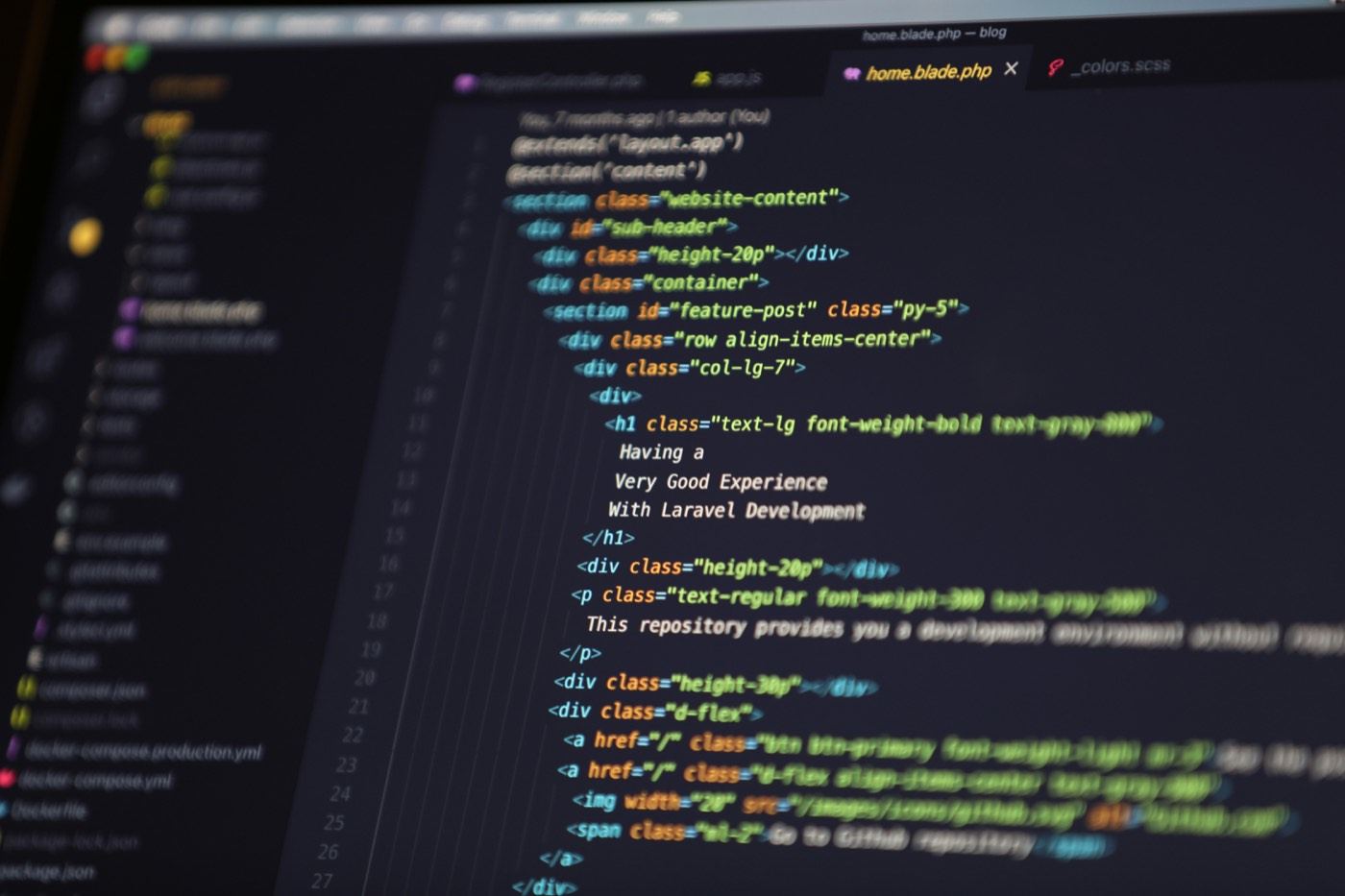
We're often asked why we standardize on a fairly focused set of technologies rather than chasing whatever's newest. The honest answer is that client projects need to be maintainable for years, by people who didn't necessarily build them — and that constraint shapes almost every tool choice we make.
- We standardise on a focused set of proven technologies rather than chasing every new tool.
- PHP, Laravel and Magento 2 cover most web and e-commerce work; Flutter is our default for mobile.
- Infrastructure is deliberately boring so it stays reliable and affordable.
- We match the stack to your requirements and can work with your existing technology.
Backend: PHP, Laravel & Magento 2
Magento 2 remains one of the most capable open platforms for complex catalog and B2B requirements — multi-store setups, tiered pricing, complex product configurations, and deep integration needs that off-the-shelf SaaS platforms often can't handle without expensive workarounds. For everything outside of e-commerce, Laravel is our default: a mature, extremely well-documented framework with a large hiring pool, which matters as much as any technical feature when a client needs to bring on their own team later.
Frontend: pragmatic over trendy
For content-heavy marketing sites, we lean toward server-rendered, framework-light builds — fast to load, simple to hand off, and cheap to host. For interactive web apps and dashboards, we use React where the added interactivity genuinely earns its complexity budget, not by default. The test we apply is simple: does this page need client-side interactivity to do its job, or is a framework here just adding build complexity for a static page? A lot of marketing sites don't need a JavaScript framework at all, and skipping one measurably improves load time and SEO.
Mobile: Flutter as the default
For most client mobile apps, Flutter gives us one codebase across iOS and Android, faster delivery, and lower ongoing maintenance cost — see our full breakdown in Native vs. Cross-Platform. We reach for fully native only when a project's requirements genuinely call for it: deep hardware integration or performance headroom a cross-platform framework can't comfortably provide.
Infrastructure: boring, on purpose
We favor well-understood hosting setups — managed VPS or Plesk-style environments, standard LAMP/LEMP stacks, conventional CI — over exotic serverless architectures for most client projects. Serverless has real advantages at certain scales, but for the majority of business websites and apps, a conventional server is easier to debug at 2am, cheaper to run at typical traffic levels, and doesn't require specialized expertise to maintain after we hand it off.
"We choose tools based on longevity and production track record — not hype."
Databases: match the tool to the data shape
MySQL/MariaDB for most relational, transactional data — orders, users, catalogs. SQLite for smaller, self-contained tools where a full database server would be operational overkill (our own admin CMS runs on it). We reach for something like PostgreSQL specifically when a project needs its more advanced querying or data-integrity features, not as a default.
What we deliberately avoid
We're cautious about adopting brand-new frameworks or infrastructure patterns on client work in their first year or two of existence, no matter how promising they look. A client's website needs to still be maintainable — by us or by someone else — five years from now, and that means favoring tools with a track record over tools with hype. We do experiment with newer technology, just not on the critical path of a paying client's production system.
How we choose a stack for a new project
- Fit for the problem. The requirements come first, not the technology.
- Production track record. We prefer tools with a proven record over hype.
- Talent and continuity. The stack should be easy to hire for and maintain.
- Total cost. Licensing, hosting and maintenance are considered along with build cost.
- Security and support. Active maintenance and a healthy community matter.
Where each tool fits
- Laravel and PHP: web applications, portals, APIs and custom business software.
- Magento 2: large catalogs, B2B and complex e-commerce requirements.
- React and Next.js: fast, interactive front ends and SEO-friendly websites.
- Flutter: iOS and Android apps from one codebase.
- MySQL and PostgreSQL: relational data for most business systems.
What this means for you as a client
A focused stack means our engineers know these tools deeply, projects are easier to hand over and maintain, and you are not locked into obscure technology. If you already have a system built on something else, we can assess it and work with it where that makes sense.
Frequently asked questions
Why do you still use PHP and Laravel in 2026?
They are mature, well supported and productive, with a large talent pool. For business applications and e-commerce they remain a practical, cost-effective choice.
Do you use React or Next.js?
Yes. We use React and Next.js for fast, interactive front ends and SEO-friendly websites, often alongside a Laravel or other backend API.
Why Flutter over native for mobile?
Flutter lets us deliver iOS and Android from one codebase with smooth performance. We recommend native development when a project genuinely needs it.
Can you work with our existing technology?
Yes. We can review your current stack and extend, maintain or gradually modernise it rather than forcing a rewrite.
Curious what we'd recommend?
Every stack decision starts with your project's actual requirements — team size, budget, timeline, and what the system needs to do in three years, not just at launch.